Dealing With Body Hair
Those of us who underwent a testosterone puberty have a lot of body hair. It's something that a lot of transfemme individuals decide to deal with in one way or another.
I've summarized some of the most common methods in this article. There are tons more, but hopefully this will give you enough of an overview that you can do more investigation on the ones that most appeal to you.
Understanding Body Hair
There are two types of hair on our bodies. "Vellus" and "terminal." Vellus hairs are usually short, soft, and colorless. Most cis/fem body hairs are vellus hairs. Terminal hairs grow longer, and are often thicker and darker.
When humans undergo testosterone puberty, many of the vellus hairs on our bodies become terminal. HRT won't reverse this process. Once a hair is terminal, it will stay terminal and continue to grow back except in some particular cases that we'll go into below.
However, HRT does tend to thin some body hair. As an example, there wasn't a clear distinction between my facial hair and my head hair when I started HRT. Over the course of a few months, some of my facial hair in my sideburns grew out under my 'head' hair. It was clear which of the hairs were facial, because there was a distinct difference in the thickness and darkness of the hair that continued to grow after I started HRT.
How much your body hair is noticeable pre- and post-HRT is a function of the thickness and darkness of your hair more than anything else. Some transfemme people might be able to get away with not doing much at all to their body hair, while others might find their body hair quickly triggers dysphoria.
Temporary Hair Removal
Shaving
Ah, shaving. Most humans do at least a little bit of shaving. For those of us who underwent testosterone puberty, we are often familiar with shaving our faces. Shaving is pretty easy to do, the materials are all straightforward to acquire, and since guys and girls do it, there's little to no risk of "being discovered" if you're caught with the supplies for it.
That said, there's still things you should know about shaving.
Trimmers
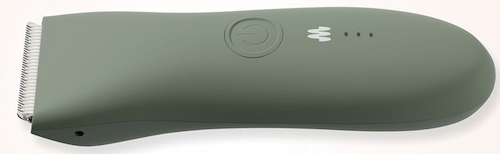
If you are starting from fairly long body hair - that is, you've never shaved a region of your body, or you let the hair grow out - then you will want to start by trimming it. Most razors don't do a great job on "long" hairs. Instead, they tend to pull them, which is painful and irritating to the skin.
A trimmer is designed to, well... trim hair. It just makes it short. How short depends on the trimmer and whether or not you use a "guard" on it.
Many male electric razors come with a built-in trimmer. These are frequently garbage. I suggest spending a bit (if you can) to get a dedicated trimmer.
The photo above is of the one I have, a Meridian Body Hair Trimmer. I got mine from Amazon. I picked this one because:
- It has a wide cutting surface, so it's great for trimming large body areas
- Charges via USB, so if you need to hide it somewhere, you can plug it in wherever you have a spare port
- The design is such that it doesn't pinch the skin. I tried a few other trimmers that tore holes in me (ouch!) leaving painful marks that took weeks to fade
- A couple of guards are included, in case you want to remove less hair
- Easy to clean, the top flips up and you can rinse it out
Whenever you're trimming a lot of hair, be careful about where that hair goes. Especially if you are trimming in the shower, you might want to invest in a "tub shroom" or something similar. Stuff that goes down the drain has to pass through a series of tubes in order to actually leave your house, and those tubes can be easy to clog.
Since you don't have to trim hair while you are wet, you can also just close the drain on your tub/shower, trim, and then wipe out the hair with a paper towel. Then, the hair ends up in the trash rather than down the drain.
Razors
Razors come in many varieties. By far the most common are electric razors and disposable razors. If you underwent a testosterone puberty, then chances are decent you already have one or both of these.
Electric Razors
Electric razors will trim hair pretty close, at relatively low risk. It's hard to cut yourself with an electric razor. It's also quite fast, and for large areas of your body, you'll find it saves a lot of time. If the stubble it leaves behind isn't enough to bother you, it's a great route.
Electric razors don't discriminate between "face hair" and "body hair" - so if you have an electric already for your face, it's going to do fine.
If you're in the market for a new one, look for a model that handles curved/irregular areas of your body. Stuff like the backs of your knees or armpits can get a little hard to deal with if your razor is only designed for "flat" areas.
Disposable Razors
Disposable razors trim hair very close, but they're more of a hassle. The blades (or the whole razor) have to be replaced frequently. Often it's less irritating to the skin to shave with some type of cream or lotion, so you're likely to want to do this in the shower. Nicks may occur, although they're usually quite mild. Finally, this type of shaving tends to irritate skin, so you're going to want to use body lotion on any shaved areas once you're done.
I've used a few of these at this point:
- Gillette Venus 3-blade
- Gillette Venus 5-blade
- Billie Razor 5-blade
I honestly didn't see that much of a difference in the 3 vs 5 blade models. The Billie razor seemed to work fine, and I got a good deal on it (and a few refills) so I'll nudge things a little in their direction. If you/your family has a membership to Sam's or Costco, they often sell razors like these in bulk at a discount.
Some of the razors (ie, the Venus 3-blade) came with "lubricating strips" (maybe 1 mm wide) above and/or below the blade. Others had more of a "lubricating head" that was almost like a bar of soap stuck all the way around the razor's head.
The Venus 5-blade in particular came in a bunch of different varieties, but this all boiled down to the scent of the lubrication. Otherwise, it was basically the same.
I can't say that the lubricating bits really made that much of a difference given they wore away so quickly (like within a week or so). I always opted to use some other form of soap when shaving. A pouf with body wash or shave gel works fine, in my experience.
If you want to know more about shaving with a disposable razor, this guide is quite comprehensive!
Plucking, Threading, Epilating, and Waxing
So you've decided to yank those hairs, eh? There are several approaches.
The benefit of these methods is that they pull the whole hair out, including the root. It takes a little longer for the hair to grow back as a result. Also, since the part under your skin is gone, the skin may appear more 'femme' if you tend towards lighter skin and darker hair.
Plucking is just using a tool (like tweezers) to grab individual hairs and yank them one by one. You want the tweezers to have a decent amount of contact area between the two 'arms,' because that enables them to hold onto the hair better. Plucking works great when you have relatively sparse hair over a large area.
Threading is like "speed plucking." Using a doubled up, twisted thread (ohhhhh!), hairs are caught in the twist and yanked with precision. It's a popular method of shaping eyebrows, for example. It tends to work best with facial hair, and I've been told it doesn't work as well with other body hair, but I bet it depends on the type of hair you have.
Epilating is "robot plucking." A spinning set of metal pinchy bits grabs hair across a wide area, and yanks it as it rotates. Epilators end up looking like a cross between an industrial shredder and an electric razor.
Since you're pulling the hair completely out of your skin, these methods can be a little painful. Also, they can open holes into the lower layers of your skin, which can sometimes lead to infection or ingrown hairs. That risk is generally mild, as long as you take care of your skin, though.
If you're planning on getting laser hair removal, don't pluck. The part you tear out of your skin is the part the laser uses to kill the root of the hair.
Depilatory Creams
Ah, hair destruction through the magic of chemistry!
This method employs chemicals that make hair not want to be hair anymore. Usually this involves attacking the keratin and changing the pH of the area to which they are applied.
You're going to want to do this in the shower, and follow the instructions carefully.
Much like the plucking examples in the previous section, this destroys the entire hair, so it will seem to grow back slowly.
Permanent Hair Reduction/Removal
Sometimes it's not enough to rough up the hair and get it to go away for a little while. In those cases, we must employ more... extreme measures.
Laser & IPL
If you have light skin and dark hair, laser treatments can do a decent job of reducing your body hair.
This method works by firing high intensity, short duration beams of laser energy at the skin. The specific wavelength is tuned to "cook" the hair while mostly passing harmlessly through the skin.
If the hair is in the "growing" phase of its cycle, then the energy can destroy the follicle, which can prevent the hair from growing again. However, it's still possible for the follicle to regrow in the future.
Since hairs have to be caught in the right phase in order for the follicle to be destroyed, usually multiple sessions of laser treatment are needed. The number varies depending on the person, but this mean getting treated in the same area once a month for 6-12 months. After the hair has been reduced, maintenance treatments are generally needed a few times a year to catch hairs that might be regrowing.
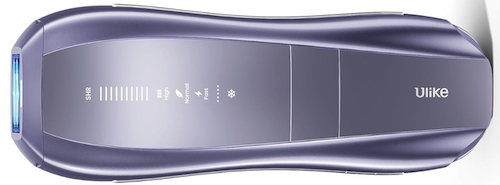
There's also a similar technology called "Intense Pulsed Light" or "IPL." This type of treatment is often found in "at home" hair reduction devices. Despite not being a laser, it's often still called "laser hair removal."
In my personal experience, I found the at-home IPL treatment to be quite a bit less effective than the in-office laser treatment. That said, the cost of an at-home IPL unit can be pretty cheap compared to a years' worth of in-office sessions. You might consider a combination of both for different areas of your body, should you go this route.
For either of these methods, keep in mind that you may end up with the equivalent of a sunburn after a session. Have aloe or other sunburn cream on hand to lessen those effects. You may not want to shave the area for a couple of days afterwards.
You also should not pluck hairs - let any "cooked" hair grow out/fall out on its own.
Electrolysis
Technically, only electrolysis is "certified" in the US to permanently remove hair.
Electrolysis uses electric current flowing from a tiny (one might say... hair-thin!) needle to create a small amount of sodium hydroxide at the root of the hair. This kills the follicle, permanently.
Since only one hair can be zapped at a time, electrolysis is a slow process. Thankfully, it's permanent!
When I went in for a hair removal consultation, I was advised to start with laser to "debulk" and get most of the hair gone, and then I could follow up with electrolysis for persistent hairs that refused to get zapped.
Pain Management
Electrolysis in particular can be somewhat painful. Some people also don't enjoy the "tons of tiny slaps" sting of the laser, either.
There are creams and sprays on the market that can numb your skin. The hair removal place that I use includes pain cream in the electrolysis treatments, but it's an extra, optional fee for laser.
If you'd like to take pain management into your own hands, look for these ingredients:
- Lidocaine - Marketed over the counter in the US for... uh... butt pain relief (el oh el)
- Benzocaine - Common in oral pain medications, although you can find it in creams and sprays for skin use
- Tetracaine - A lot less common over the counter in the US, although I've seen it in eye drops
Med spas often mix the three to make "BLT cream" - but this mixture is not easily obtained by individuals. However, I have found shops online that sell little packets of all three. I guess mixing it yourself gets around whatever regulations exist?